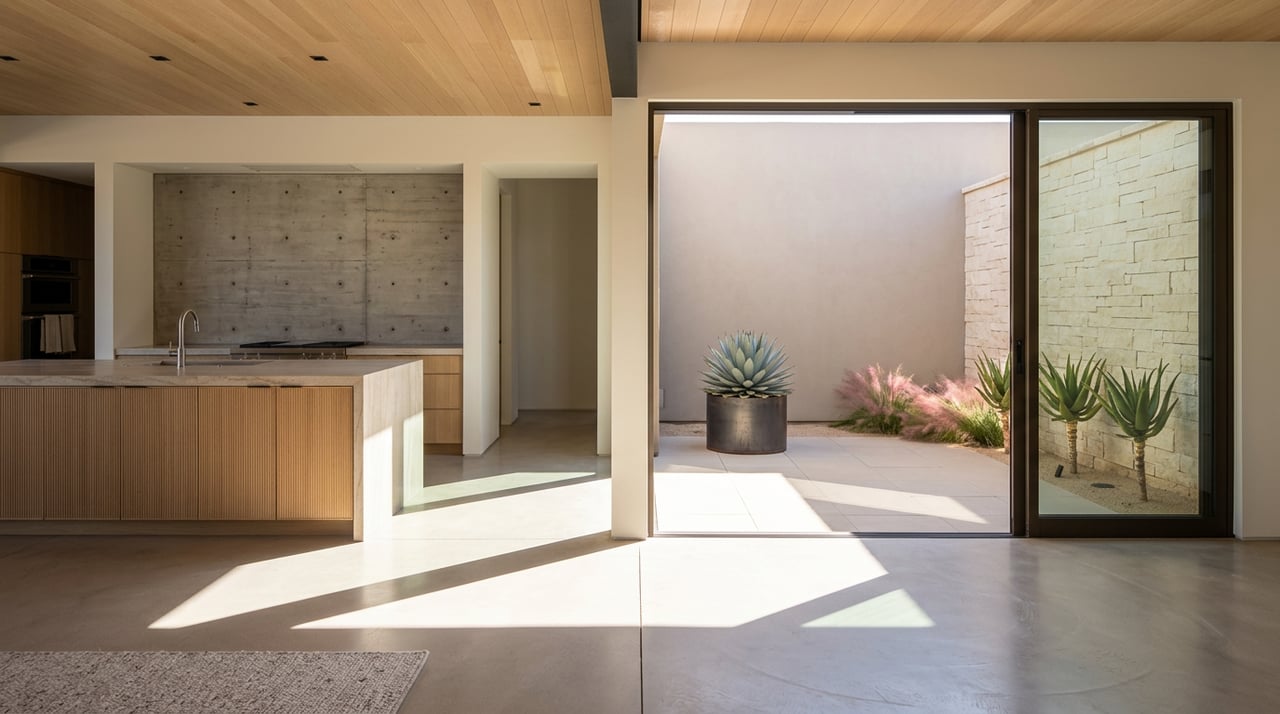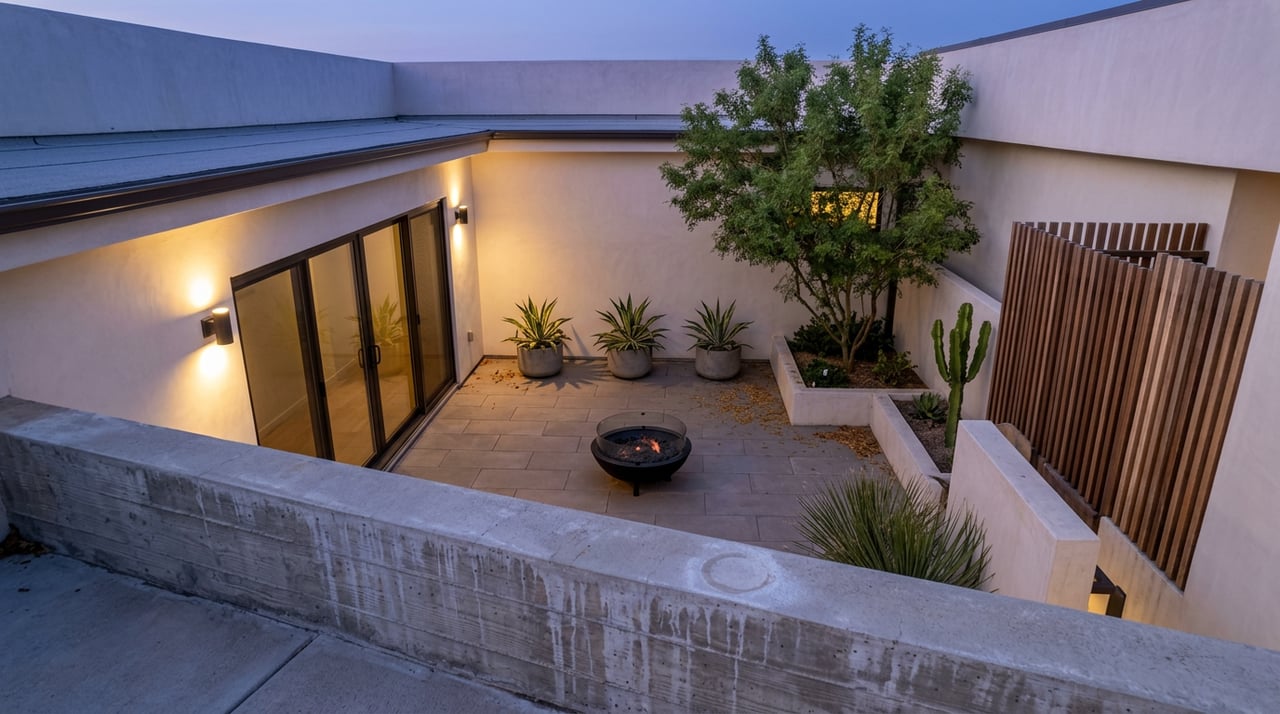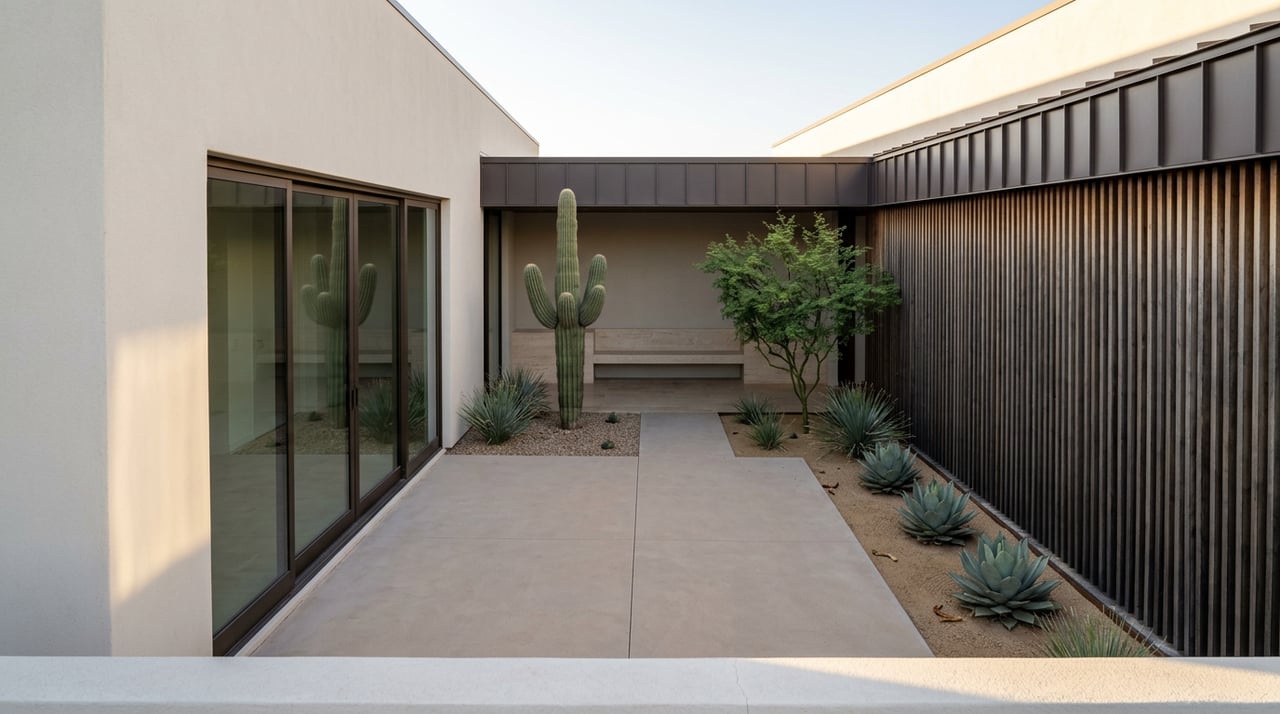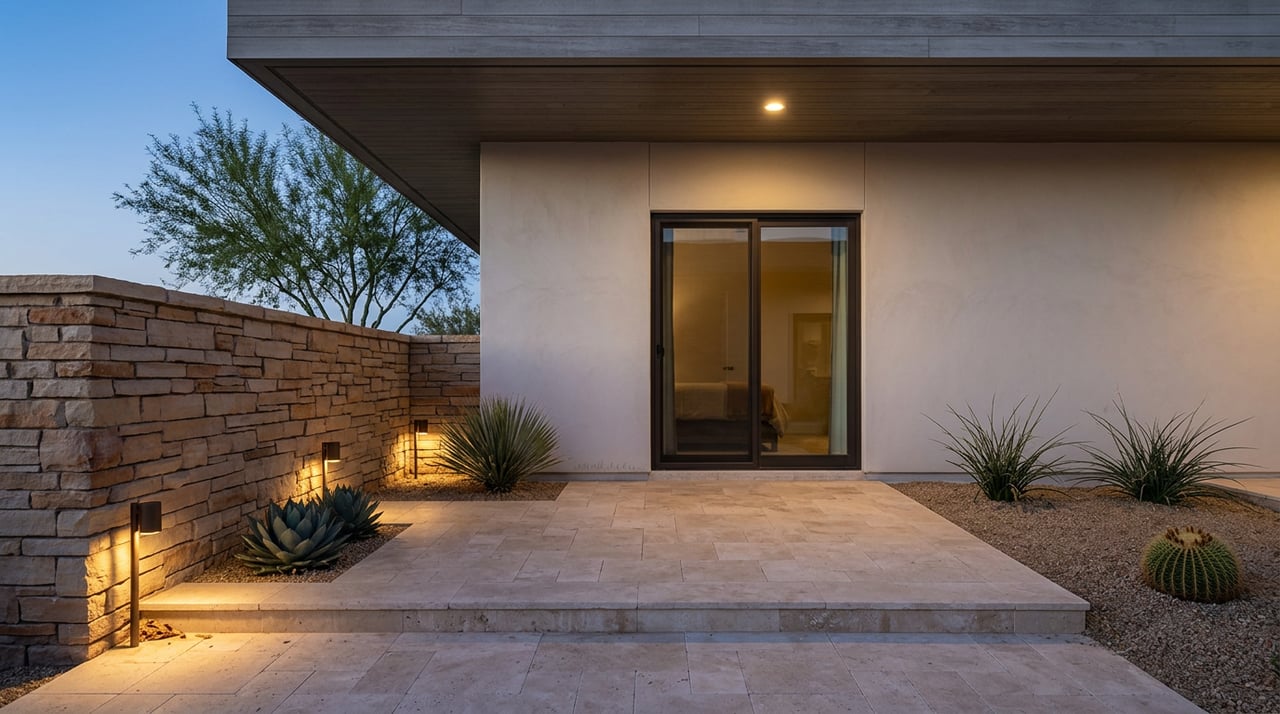
The photographer shows up at dusk, which is exactly when Fountain Hills listings are supposed to shine. Warm light spilling across the patio, uplit saguaros throwing shadows against the block wall, a little drama for the hero shot. Except the seller bought three new landscape spotlights the week before to make that shot happen, and none of them meet the town's lighting code. Now the listing photos have to wait, or the fixtures have to come back out of the box for a return.
This is not a hypothetical inconvenience. It is the specific place where Fountain Hills' Dark Sky reputation, the same thing that makes the town genuinely distinct in the Phoenix metro, runs straight into the mechanics of a home sale. Most write-ups about Fountain Hills treat the dark sky designation as a lifestyle footnote: stargazing from the patio, a nice bullet point next to the golf courses and the Avenue of the Fountains. Almost none of them explain what the ordinance actually does to a transaction, or why the rule that protects the night sky is also the rule most likely to slow down your closing timeline if you don't plan around it.
What the ordinance actually restricts
Fountain Hills adopted a revised Outdoor Lighting Ordinance, folded into Town Code as Chapter 8 of the Zoning Ordinance, in December 2016. It is not a vague suggestion about "being mindful of your neighbors." It sets specific numbers.
- Any fixture producing more than 2,250 initial lumens must be fully shielded, meaning the light is directed downward and cannot spill upward or sideways.
- Fixtures between 1,125 and 2,250 lumens need at least partial shielding.
- No outdoor fixture can exceed 3,000 Kelvin in color temperature, which rules out the cooler, bluish-white LEDs that have become the default at most hardware stores.
- Light trespass onto a neighbor's property is restricted regardless of fixture wattage.
None of that is enforced retroactively. Fixtures installed before the 2016 update are grandfathered and can stay exactly as they are. The catch is what happens the moment you touch them.
The grandfather clause that becomes someone else's problem
Here is the part that actually matters for a transaction: grandfathering only protects the fixture that is already there. The instant you replace it, upgrade it, or add to it, the new or replaced fixture has to meet the current standard. That single fact creates a strange incentive structure that plays out differently depending on which side of the closing table you're sitting on.
For a seller, the temptation right before listing is to brighten things up. New landscape lighting, a security floodlight over the garage, a warmer glow along the walkway for evening showings. Every one of those "quick curb appeal wins" is a new installation under the ordinance, which means every one of them has to hit the lumen and color temperature thresholds on day one. A seller who grabs generic fixtures from a big box store without checking the specs can end up with lighting that has to be swapped again before the photographer's next visit.
For a buyer, the risk sits on the other end of the timeline. A home with charming, decades-old landscape lighting that was never touched is fully compliant simply by virtue of never being replaced. But the first time that new owner decides to add a fixture, replace a bulb assembly, or extend the system to a new patio, the grandfathering ends for that fixture. What looked like a purely cosmetic backyard project turns into a compliance question. Existing non-compliant fixtures on a home you buy may need to be replaced over time, and buyers who want brighter entertaining spaces should budget for compliant fixtures rather than assuming the existing setup can simply be expanded.
That is the mechanism worth understanding before you write an offer or set a list date. The ordinance does not punish anyone for what is already installed. It quietly attaches itself to whatever gets installed next, and that liability transfers with the house.
Why sellers hit this at the worst possible moment
Twilight photography is one of the most effective tools a Fountain Hills listing has, precisely because the town's darker skies make warm exterior lighting read so well on camera. That is also exactly when a seller is most likely to add a fixture they haven't checked against the code, because the goal in the moment is a better photo, not a compliance review.
A few practical notes worth acting on before any pre-listing lighting purchase:
- Check the lumen rating on the packaging before buying anything for landscape or security lighting. Most commercial floodlights and many decorative post lights exceed 2,250 lumens and will need a shielded housing to stay compliant.
- Look for color temperature listed on the box or spec sheet. Anything above 3,000K, which includes most "daylight" or "cool white" LED options, is not permitted outdoors regardless of how it's aimed.
- Temporary holiday lighting is treated differently. The town's ordinance allows seasonal decorative lighting for a reasonable period before a holiday, provided it is minimized after 11 p.m. and removed within two weeks afterward, so a listing that happens to overlap with the holidays doesn't need special lighting permits for string lights.
- If a fixture is simply staying in place, unchanged, it remains grandfathered. The compliance question only arises with something new or replaced.
None of this requires an electrician's visit or a town inspection before you list. It requires knowing the thresholds before you're standing in a lighting aisle a few days before the photo shoot.
Buyers on view lots and hillside parcels face an extra layer
If the home you're considering sits on a hillside or has a prominent mountain view, which describes a meaningful share of Fountain Hills' inventory given the elevation range across town, the lighting question can intersect with the town's broader design review framework. Chapter 19 of the zoning ordinance establishes architectural review guidelines for certain development, and depending on the property, changes like exterior lighting, wall placement, or grading may require town approval, HOA approval, or both, particularly where those changes could affect a neighbor's sightline. A landscape lighting plan that would be routine on a flat interior lot can become a multi-step approval process on a lot with prominent visibility. Buyers who are already planning a lighting upgrade for a hillside home should treat that review step as part of the purchase timeline, not an afterthought that surfaces after closing.
How a complaint actually gets resolved
The Fountain Hills Dark Sky Association, the volunteer group that helped bring the town its International Dark Sky Community designation from DarkSky International in January 2018, does not have enforcement authority. If a neighbor's fixture seems out of compliance, the Association's guidance is to direct that complaint to the town's Code Enforcement office rather than the Association itself. The group's role is educational: it offers a free self-assessment tool that walks a homeowner through their existing fixtures and flags likely compliance issues before a complaint ever happens. For a seller who inherited an older lighting setup and isn't sure whether anything on the property was replaced without documentation, running that self-assessment before listing is a low-cost way to avoid a surprise mid-escrow.
The takeaway for your closing timeline
The dark sky designation is a genuine selling point for Fountain Hills, and it should stay a selling point rather than becoming a source of last-minute scrambling. The practical move for a seller is simple: treat any new exterior fixture purchased for staging or curb appeal as a compliance decision, not just an aesthetic one. For a buyer, the move is just as simple: ask whether any exterior lighting has been replaced since 2016, and budget for compliant fixtures if your plans include brighter entertaining or security lighting rather than just leaving the existing setup untouched.
If you're weighing a listing timeline in Fountain Hills, or comparing a hillside lot against an interior one where the lighting rules apply differently, Hoyt Homes Group can walk through what a specific property's existing fixtures and site conditions mean for your plans before you're standing in a hardware store aisle with a return receipt in hand. Get Your Instant Home Valuation to start the conversation with real numbers on the table.
Frequently asked questions
Does the lighting ordinance apply to interior lighting visible through windows? No. The ordinance regulates outdoor fixtures, meaning lighting mounted outside the home or aimed at exterior spaces. Interior lighting is not restricted by this code.
If I'm selling as-is and not touching any fixtures, do I need to do anything? No. Fixtures that predate the 2016 ordinance and haven't been replaced remain grandfathered. The compliance requirement only triggers when a fixture is newly installed or replaced.
Can an HOA have stricter lighting rules than the town ordinance? Yes. Some Fountain Hills communities layer their own architectural or lighting guidelines on top of the town code, particularly in hillside or view-lot developments subject to additional design review. Checking both the town code and any HOA governing documents before installing new fixtures avoids conflicting requirements.