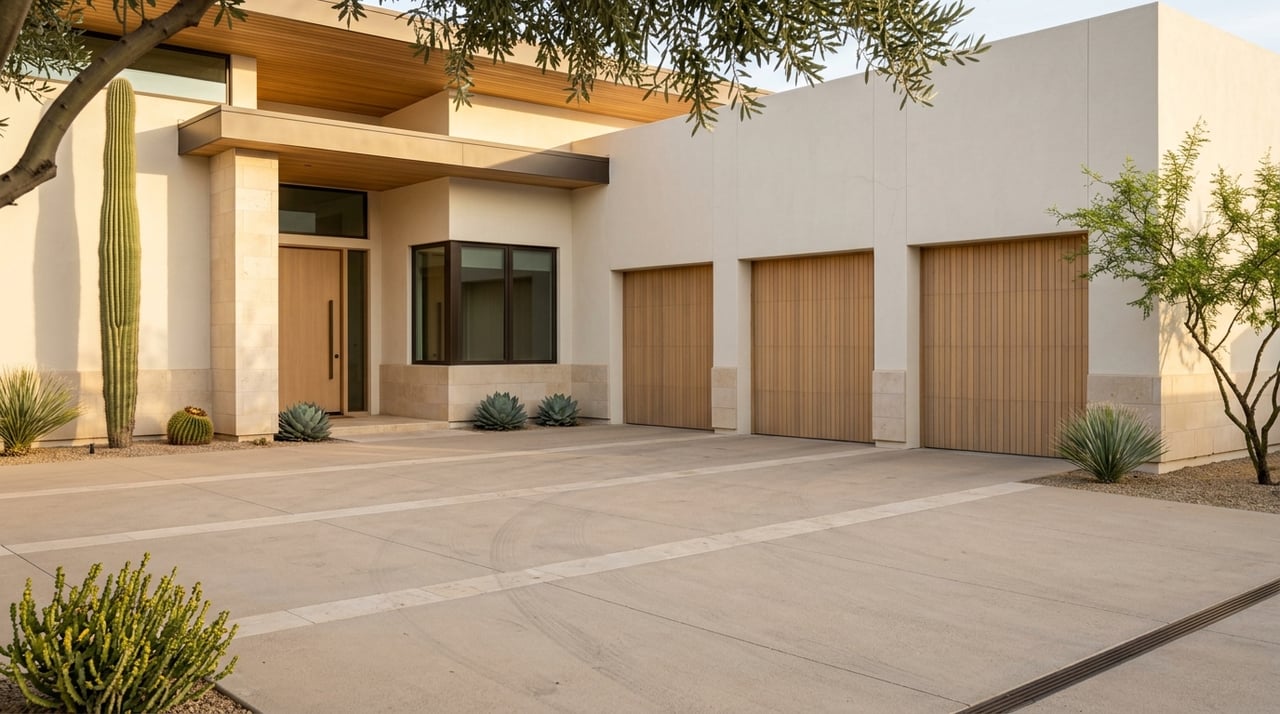
If you look at home prices in and around Paradise Valley and wonder why they can seem to follow a different set of rules, you are not imagining it. This is a market where land, privacy, views, and what can actually be built on a parcel often matter as much as the house itself. If you are buying, selling, or simply trying to understand value in this part of the Valley, here is what shapes pricing and why simple square-foot math often falls short. Let’s dive in.
Why Paradise Valley pricing stands apart
Paradise Valley is shaped by scarcity in a way that directly affects home values. The town’s 2022 General Plan says Paradise Valley is intended to remain a primarily one-acre residential community, and it also notes that the town is approaching build-out with limited undeveloped land left.
That matters because when supply is naturally constrained, each parcel carries more weight. The town’s land-use plan shows that 75.94% of the planning area is single-family residential, while only 5.20% is undeveloped or vacant. In practical terms, buyers are not just competing for homes. They are competing for a limited number of viable estate sites.
How the numbers frame the market
Recent data place Paradise Valley firmly in the ultra-luxury category, but the market is not one-size-fits-all. In March 2026, Redfin reported a median sale price of $4.7975 million, 87 days on market, and a median price of $970 per square foot. Zillow reported a typical home value of $3.4746 million, up 13.6% year over year, with homes going pending in about 32 days, while Realtor.com reported a median listing price of $4.9925 million and a 95% sale-to-list ratio.
Those differences are useful, not confusing. They show that Paradise Valley pricing depends heavily on what is being measured, whether that is closed sales, listing prices, or estimated value. More importantly, they point to a market where negotiation, positioning, and property-specific strengths matter more than broad averages.
Why 85250 needs context
Because the target area here is within 85250, it is important to separate the broader zip code from Paradise Valley’s estate market. For the surrounding 85250 zip, Redfin reported a March 2026 median sale price of $675,000 and 57 median days on market, while Realtor.com showed a median listing price of $676,767.
That is dramatically different from Paradise Valley proper. Redfin’s luxury-specific Paradise Valley page showed 276 luxury homes for sale at a median listing price of $5.97 million, with most homes staying on the market about 101 days and receiving one offer. So if you are pricing a Paradise Valley property, the wider 85250 average should be treated as background, not as a direct comp set.
Land drives value first
In many markets, buyers start with the house. In Paradise Valley, the site often comes first. Lot size, shape, slope, privacy, and view corridor can all influence price before you even get to finishes or interior square footage.
The town’s zoning framework reinforces that point. Paradise Valley includes large-lot districts such as R-43, which requires at least 43,560 square feet, and R-175, which requires at least 175,000 square feet. In a market built around estate parcels, what a lot offers and what it allows can dramatically affect value.
Zoning and buildable envelope matter
A Paradise Valley home is not valued only by what stands on the property today. Buyers and sellers also look at the buildable envelope, which is shaped by zoning, floor area ratio, setbacks, and height limits.
The town’s current FAR certification says lots zoned R-175, R-43, R-35, R-35A, R-18, and R-18A must maintain a 25% floor area ratio. The town’s height certification for R-43 and R-175 also shows maximum primary-structure heights of 24 feet, 26 feet, or 30 feet depending on lot size.
That means two homes with similar current square footage may have very different long-term value. One parcel may offer more flexibility for expansion, guest space, or outdoor living features, while another may be more constrained. In Paradise Valley, that potential is part of the price story.
Why smaller homes can sell for more
This is one of the most common questions in the area. A smaller home can sell for more than a larger one because buyers may be paying a premium for the lot, the privacy, the views, or the future utility of the parcel.
That is especially true in a town where large residential lots and natural setting are part of the core identity. The General Plan emphasizes open space, mountain views, and private open areas as community assets. So a well-sited home on a stronger parcel may outperform a larger house on a less compelling lot.
Views and privacy shape buyer perception
Paradise Valley’s appeal is tied closely to its desert setting. The town’s planning framework aims to minimize impacts on mountain views from public rights-of-way and neighboring properties, and its vision statement highlights privacy, quiet, dark skies, and public safety.
The setting itself also carries weight. Paradise Valley is described by the town as a quiet desert oasis surrounded by Camelback Mountain, the Phoenix Mountain Preserve, and the McDowell Mountains. Because of that, elevation, orientation, buffering, and view preservation often become major value drivers.
Design quality can widen the price gap
Not all square footage is valued equally in Paradise Valley. The town’s General Plan notes that it can accommodate multiple architectural styles as long as they fit the environmental setting, and it also points to a trend of older homes being replaced or remodeled to meet current buyer expectations.
That helps explain why renovated and thoughtfully designed homes can command a premium. Buyers in this market often respond to cohesive indoor-outdoor living, strong architectural fit, and a property that feels complete rather than simply large.
Renovation level matters more here
The town’s FAR certification counts features like courtyards, trellises, ramadas, guest homes, and other accessory structures in the total envelope. That means luxury value is often tied to how the whole property functions together, not just the main house interior.
A turnkey estate with polished outdoor spaces, integrated guest accommodations, and a clear design vision may price far above a similarly sized but dated property. In other words, finish level and usability can move value just as much as raw size.
Resort adjacency creates a premium
Location inside Paradise Valley is not just about street name or lot count. The town treats resort, country club, and golf-course uses as a distinct special-use category, and its land-use plan places many of these uses along the edge of town and around Lincoln Drive and Tatum Boulevard.
The town also highlights golf, resorts, spas, and fine dining as defining lifestyle features. When a home sits near those established luxury nodes, buyers may attach added value to the location because of convenience, prestige, and overall setting.
Corridor prestige influences comps
Paradise Valley’s planning documents pay special attention to visually significant corridors, including Lincoln Drive and Tatum Boulevard, with a focus on preserving gateway character and reducing visual clutter. That may sound like a planning detail, but it has real pricing implications.
Homes near recognizable luxury corridors or resort-adjacent areas may attract a different buyer pool than properties farther from those nodes. As a result, two homes with similar specs can sit in different pricing lanes depending on their location context within town.
Today’s market rewards precision
Paradise Valley is expensive, but it is not a market where any luxury listing will sell quickly at any number. Redfin’s city page says homes sell in a median 87 days and about 5% below list. Realtor.com describes the market as balanced, with a 95% sale-to-list ratio and 75 median days on market.
On Redfin’s luxury-specific Paradise Valley page, the luxury subset had 276 homes for sale at a median listing price of $5.97 million, with most homes on the market about 101 days and receiving one offer. That tells you buyers are engaged, but selective. Strong pricing still needs support from the lot, the product, and the presentation.
National luxury trends add context
Broader luxury market trends support the same conclusion. Redfin’s March 2026 luxury report said the U.S. luxury median sale price was $1.395 million, up 3.6% year over year, while luxury sales fell 2.4% and median days on market reached 73.
That report also noted that many buyers were staying on the sidelines because of mortgage rates above 6% and economic uncertainty. Realtor.com’s 2026 luxury outlook said the national luxury entry point had leveled near $1.2 million, while the ultra-luxury threshold rose to around $5.6 million at the start of 2026. In short, top-end buyers are still willing to pay for exceptional properties, but they are highly comparison-driven.
A practical way to think about value
If you want to understand how a Paradise Valley luxury home should be priced, it helps to follow a simple sequence. Start with the land, then move to the building envelope, then the house, and finally the broader location context.
Here is a practical framework:
- Site first: lot size, shape, slope, privacy, views, and any buildability constraints.
- Envelope second: zoning district, FAR, setbacks, and height limits.
- House third: condition, renovation quality, architectural fit, and whether the home is turnkey.
- Location context last: resort adjacency, corridor prestige, and whether the right comp set is Paradise Valley proper or a broader surrounding area.
This is why pricing by price per square foot alone can miss the mark. In Paradise Valley, the land and what it allows often explain the premium better than a single headline metric.
What sellers should take away
If you are selling in Paradise Valley, the strongest pricing strategy is usually not based on aiming high and hoping the market stretches. It is based on showing why your property stands out within the right competitive set.
That means telling the full value story. A compelling pricing approach should account for parcel quality, privacy, views, zoning potential, renovation level, and location context, then match those strengths to current buyer behavior in a balanced luxury market.
What buyers should watch closely
If you are buying, it helps to look beyond surface-level square footage comparisons. A home that seems expensive at first glance may make more sense once you factor in the lot, the permitted envelope, the privacy buffer, and the design quality.
The reverse is also true. A larger house at a lower price may come with tradeoffs in location, future flexibility, or overall site quality. In a scarcity-driven market like Paradise Valley, those differences can shape both present enjoyment and long-term value.
If you are trying to price a luxury home or make sense of Paradise Valley’s estate market, local context matters. The team at Hoyt Homes Group combines boutique service, premium marketing, and data-driven pricing insight to help you evaluate what truly drives value in this market.
FAQs
How does Paradise Valley’s luxury market affect home pricing?
- Paradise Valley pricing is heavily influenced by land scarcity, large-lot zoning, views, privacy, design quality, and resort-adjacent location rather than square footage alone.
Why can a smaller Paradise Valley home cost more than a larger one?
- A smaller home may sit on a stronger parcel with better views, more privacy, a better buildable envelope, or a more desirable location context, which can outweigh raw interior size.
Why should 85250 sales data be used carefully for Paradise Valley homes?
- The broader 85250 zip code has much lower median pricing than Paradise Valley proper, so using zip-wide averages alone can understate estate-level value.
What zoning details matter most for Paradise Valley pricing?
- Lot minimums, floor area ratio, setbacks, and height limits all matter because they shape what can be built, expanded, or preserved on a property.
Why do renovated homes in Paradise Valley often command a premium?
- Buyers in Paradise Valley often value turnkey design, architectural fit, and integrated indoor-outdoor living, and the town’s redevelopment trend supports stronger pricing for well-executed remodels and new builds.
Is Paradise Valley still a fast luxury market?
- It remains a high-value market, but current data suggest it is more balanced than frenzied, with buyers staying selective and properties often taking weeks or months to sell depending on pricing and positioning.